
The first time I chased down the research on after-meal bloating, I was sitting at the kitchen table at 8 p.m. with a waistband that had decided dinner was a size too small. I felt tight, a little angry at my own body, and mostly stuck. It’s one of those discomforts that hits a lot of us, and most of the fixes online are either vague or sold to you as a supplement.
So I went to the studies. Six fixes came back with real evidence behind them. The first two work for gas and fullness right after eating. The last four help most when constipation is part of the picture. My notebook says: start with the walk. It’s free, it takes ten minutes, and it has the strongest evidence on the list.

1. Take a 10-Minute Walk After Every Meal
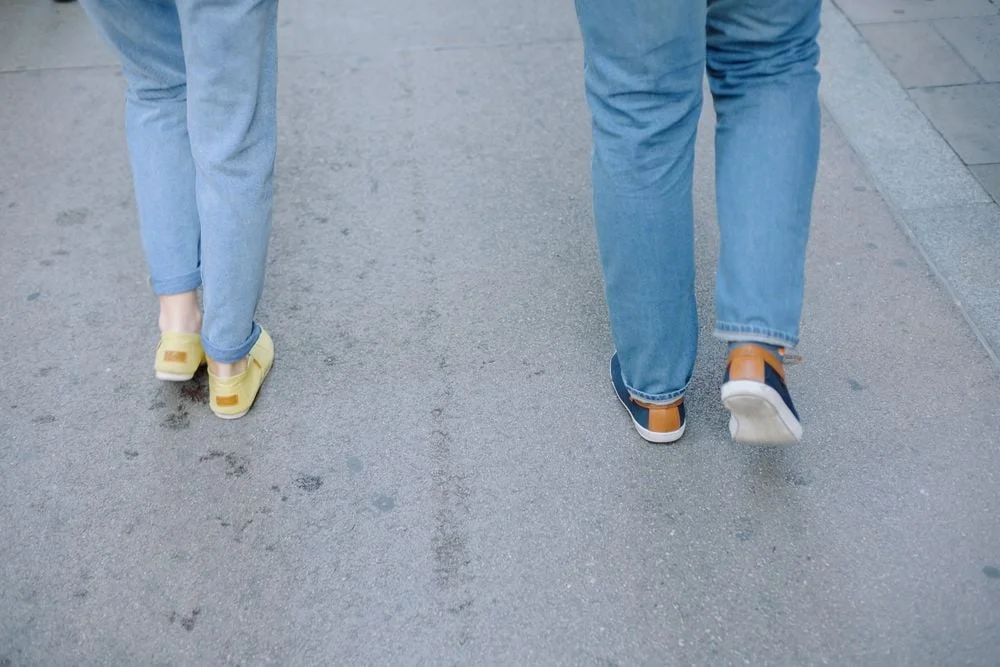
This is where I start, and it’s where the evidence is strongest. In a 2021 trial, researchers split 94 adults with functional bloating into two groups. Functional bloating means the discomfort is real, but doctors can’t find a disease causing it. One group took a prescription combination that speeds up digestion and breaks down gas every day. The other group walked for 10 to 15 minutes after each meal. Both kept at it for four weeks.
Both groups improved. Belching, gas, fullness, and abdominal discomfort all eased. But on the heavy, bloated feeling after meals, the walkers came out ahead of the medication.
Why moving helps your gut
Your intestines move food and gas along with waves of muscle contractions. A small study from Fujita Health University in Japan shows how quickly walking can stir that into action. Researchers placed electronic stethoscopes on the bellies of 21 healthy young adults and recorded the sounds their guts made at rest, then had everyone walk on a treadmill for 20 minutes at a gentle pace.
Within a minute or two of stopping, every measure of gut activity had risen. The overall strength of the bowel sounds roughly doubled. The boost was brief, fading within two to three minutes.
Read the limits honestly. The study measured sounds, not bloating or bowel movements, the volunteers were healthy and in their early twenties, and the researchers themselves say interpreting bowel sounds remains controversial. What it does show is that your gut responds to walking almost at once, likely from a shift in the nerves that control digestion and the gentle jostling your body gets with every step.
How to do it
Step 1: Keep the pace easy. The trial set the time, 10 to 15 minutes, but not the speed. An easy pace you could hold a conversation at is the right starting point.
Step 2: Walk after each meal. That’s what the trial participants did. Start with 10 minutes, and if three walks a day isn’t realistic, begin with the meal that most often leaves you uncomfortable.
Step 3: Use what you have. Laps around the house, the office corridor, or the train platform all count.
2. Stay Upright After You Eat
The sofa calls after dinner. I usually ignore it now, and my gut thanks me for it. In a study published in the journal Gut, researchers in Barcelona infused a steady stream of gas into the small intestine of eight healthy volunteers, aged 21 to 28, and measured how much came out the other end. Each person was tested twice on separate days, once upright and once lying back in bed, reclined at a 30-degree angle.
The difference was significant. After an hour, the volunteers had retained about 13 ml of gas when upright and about 146 ml when lying down.
Here’s the part that surprised me. The researchers had actually expected the opposite. They reasoned that lying back might let gas travel more easily. It didn’t. The volunteers didn’t eat a meal, the gas was pumped in for three hours, and the group was small, so the link to after-dinner bloating is an educated guess. But it’s an easy one to test on yourself: sit up straight or stay on your feet before you stretch out. Pair it with the walk, and the first half hour after dinner is covered.
3. Try a Clockwise Belly Massage
This one sounds old-fashioned, and it’s aimed at constipation rather than gas after a meal. If constipation is part of your bloating, though, the evidence is better than you might expect. In a randomized trial published in Physical Therapy, people with chronic constipation received either an abdominal massage or a fake ultrasound treatment for four weeks, both alongside lifestyle advice.
Both groups improved, but the massage group improved considerably more, and the authors concluded that massage should be a first-line option for functional constipation. One NHS bowel team at Leeds Community Healthcare teaches the technique as a clockwise massage over the belly that takes 10 to 20 minutes, used to ease trapped wind as well as constipation.
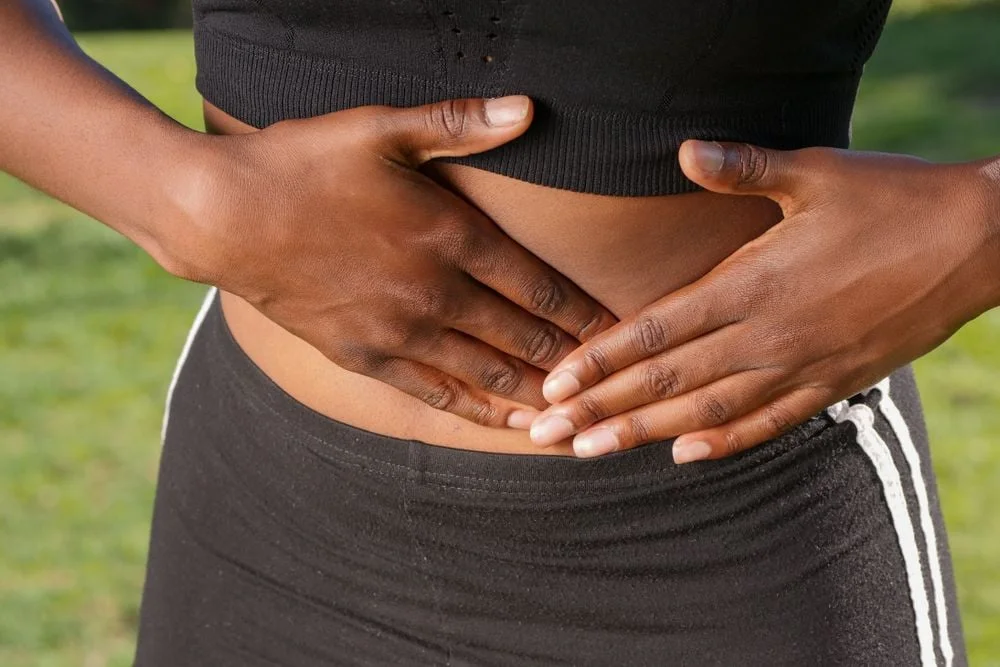
Their sequence starts with gentle upward strokes, moves to kneading with the palm down the left side of your belly, and finishes with light vibration over the belly button. Keep the pressure comfortable. It should never hurt. Leeds teaches the technique to patients, so if constipation is a regular problem, ask your doctor or a physiotherapist to show you how.
Who should skip it: The Leeds guidance says abdominal massage isn’t for anyone pregnant, or anyone with a history of inflammatory bowel disease, a bowel blockage from cancer or an abdominal growth, a spastic type of IBS, an unstable spinal injury, skin problems on the belly, or recent scars in the area. It also advises care with any hernia. If any of those apply, or you’ve had abdominal surgery, consult your doctor first.
4. Eat Two Kiwifruit a Day
If constipation is behind your bloating, two green kiwifruit a day is a simple, tasty thing to try. A University of Michigan team gave 79 adults with chronic constipation one of three treatments for four weeks: two green kiwifruit a day, prunes, or psyllium fiber.
All three improved symptoms. Kiwifruit wasn’t the strongest of the three. About 45% of the kiwi group got relief, against 67% on prunes and 64% on psyllium, though the researchers found no statistically significant difference between the three. Where kiwifruit stood out was comfort. Side effects were most common with psyllium and least common with kiwifruit, and bloating scores improved in the kiwi group. Prunes caused bloating in 36% of people, against 11% for kiwifruit, and more people were satisfied with kiwi than with the other two.

It was a small trial, so treat it as a promising start. If prunes or fiber supplements have left you uncomfortable before, kiwi is the gentler way. Eat the two kiwis at breakfast or as an afternoon snack. If you’re allergic to kiwi, skip this one.
5. Use the Window After Breakfast
Eating wakes up your colon, and you can use that to your advantage. The US National Institute of Diabetes and Digestive and Kidney Diseases suggests trying for a bowel movement 15 to 45 minutes after breakfast, at roughly the same time each day, because eating helps your colon move stool along.
The same guidance says to give yourself enough time and to go as soon as you feel the need, rather than holding it. For commuters, this is the hardest fix on the list. A rushed breakfast and a train to catch leave little room for it. Getting up 15 minutes earlier gives you the time back.
6. Put Your Feet on a Footstool
The smallest fix costs about as much as a step stool. NIDDK’s advice is to relax your muscles or put your feet on a footstool to make yourself more comfortable on the toilet. Any low, stable stool works. Rest your feet on it, relax, and breathe rather than straining.
When to See a Doctor
None of the six above needs a prescription, and that’s the point. But this is a blog, not an exam room, so here’s the honest line. Bloating that shows up most days deserves a doctor’s look. If you have ovaries, there’s a specific reason not to wait. The NHS lists feeling bloated frequently, roughly 12 or more times a month, among the main symptoms of ovarian cancer, alongside feeling full quickly and pelvic pain, and advises seeing a doctor about any of them, or if symptoms don’t go away or get worse.
These symptoms are very common and can have many causes, but they’re worth getting checked. If you already have IBS, inflammatory bowel disease, or another digestive condition, or you take medicine for your digestion, talk to your doctor before changing your routine.
Your Move:
Step 1 (5 minutes): After your next meal, stand up, put on shoes, and walk for 10 minutes. That’s the whole fix.
Step 2: Skip the sofa for the first half hour. Stay upright while the walk does its work.
Step 3: If constipation is in the mix, add one more piece this week: two kiwis at breakfast, or a footstool on the toilet. Small changes, done consistently, beat heroic fixes every time.