
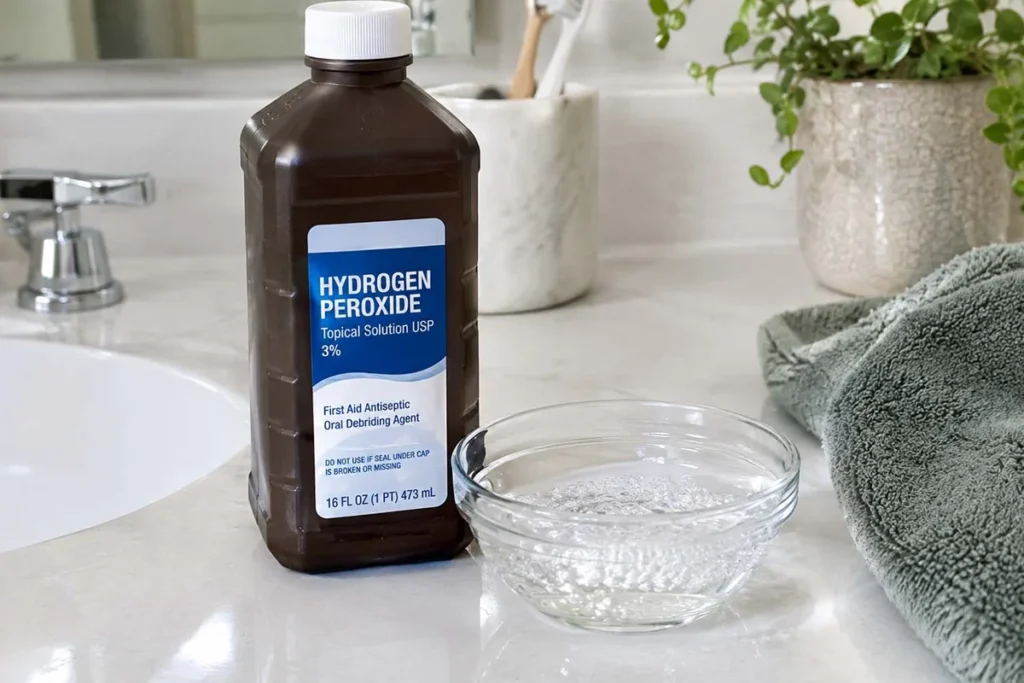
I keep a brown bottle of hydrogen peroxide in my medicine cabinet, next to the tape and the ice packs. The first time I reached for it, I got a full fizz — real, vigorous bubbles. A few months later, I poured the same bottle onto the same stain and got… nothing. Just a quiet, flat trickle.
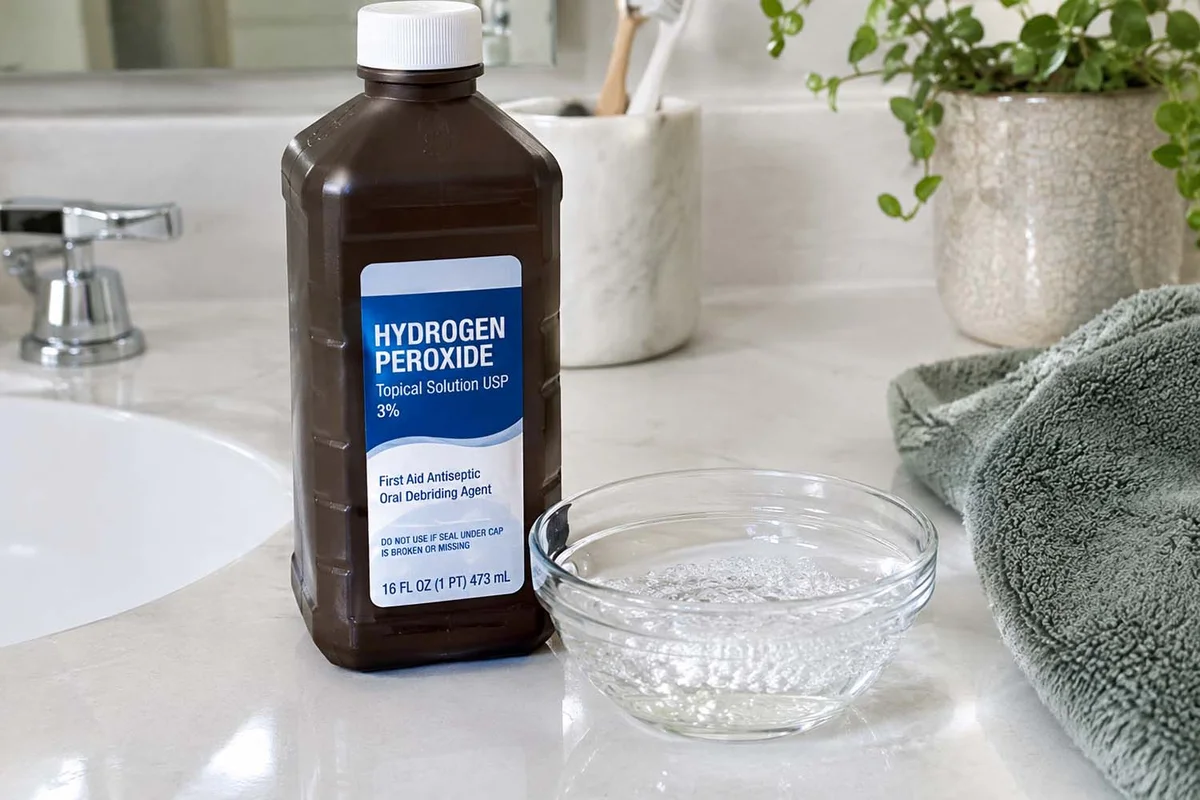
So I did the research. The short version: yes, hydrogen peroxide goes bad, and it happens whether you use it or not. It’s chemically unstable by nature, constantly breaking down into plain water and oxygen — even while it sits sealed on your shelf.
The Why: A Molecule That Wants to Come Apart
Hydrogen peroxide (H₂O₂) is water with one extra oxygen atom attached, and that extra atom doesn’t want to stay put. As The Franklin Institute explains, the solution naturally decomposes over time — and exposure to light speeds the breakdown up dramatically.
Three things accelerate it: light, heat, and contamination. UV light splits the molecule directly, which is why peroxide ships in brown or opaque bottles. Warmth speeds the reaction up. And anything that dips into the bottle — a used cotton ball, a cracked seal, a cap left off — introduces trace contaminants that act like catalysts.
Here’s the good news: expired peroxide isn’t dangerous. It decomposes into water and oxygen gas. A flat bottle is basically weak, watered-down peroxide — it just no longer does the job you bought it for.
The Fizz Test: 10 Seconds, No Lab Required
My notebook says the fizz test is the only at-home check that actually works. Peroxide has almost no smell — fresh or expired — so sniffing is out. The bubbles are the tell.
- Step 1: Pour a small amount into a sink drain or onto a small stain with a bit of organic residue.
- Step 2: Watch for 10 seconds. Fresh, active peroxide fizzes immediately with strong, sustained bubbling.
- Step 3: Strong fizz = still working. Faint fizz or nothing = it’s spent. Toss the bottle.
Coach’s Math — Shelf life at a glance:
• Unopened, cool and dark: 1 to 3 years
• Opened bottle: noticeably weaker within 1 to 6 months
• Standard drugstore bottle: 3% concentration
• Hair-care / gardening strengths: 10%+ decompose faster, store more carefully
• Specialty strengths: 30%+
When to Toss It
No fizz on the test. That’s the clearest sign the active peroxide has broken down.
Past the printed expiration date, especially once opened. Manufacturers typically print a date roughly a year or two out from bottling.
Stored in a clear container or somewhere sunny. If you decanted it into a spray bottle or left it on a windowsill, assume it died faster than the label says.
Or a bottle that feels soft or has lost its seal integrity after long storage. More air in, faster it breaks down.
How to Store It So It Lasts
- Keep it in the original brown or opaque bottle. This is the single biggest factor in shelf life. Never transfer it to clear containers for storage.
- Store it cool and dark — a closed medicine cabinet, away from radiators and sunny windows.
- Recap it tightly the second you’re done. Every second it sits open lets air in.
- Never dip used cotton back in. Pour a small amount into a separate cup instead — contamination from skin or used applicators dramatically speeds decomposition.
- Use it sparingly? Buy smaller bottles. A full bottle that sits for years still slowly loses potency, even stored perfectly.
A Note on Wound Care
Peroxide has a long history as a first-aid staple, but current guidance has moved on. The Cleveland Clinic now generally advises against using it to clean cuts and scrapes — it can irritate healthy tissue and slow healing rather than help it. For minor wounds, plain soap and water or saline plus a clean bandage is the current recommendation.
This is general info from the Cleveland Clinic, not medical advice for your specific injury — when in doubt, ask your doctor.
Peroxide’s real strengths today are household disinfecting, cleaning, and stain removal. Which is exactly what I reach for it for.
Disposing of Old Peroxide Safely
Standard 3% household peroxide is one of the easiest things to dispose of in your cabinet: pour a flat or expired bottle down the drain with running water. No hazardous-waste handling needed at that concentration.
Higher strengths are different. Solutions like the 10%+ versions used for hair treatments or gardening should be significantly diluted before pouring. Very high concentrations (30%+) are best taken to a household hazardous waste facility — they’re more reactive and can be corrosive.
Frequently Asked Questions
Does hydrogen peroxide expire? Yes. It’s chemically unstable and constantly decomposes into water and oxygen, even sealed and unopened. A sealed bottle in a cool, dark spot lasts 1 to 3 years; once opened, it typically loses meaningful strength within 1 to 6 months as light and air speed the breakdown.
Is expired hydrogen peroxide dangerous? No. It’s just weak. It decomposes into plain water and a bit of oxygen gas, so an old bottle won’t hurt you — it simply won’t disinfect, bleach, or lift stains as effectively as a fresh one.
Why is my hydrogen peroxide in a brown bottle? Light, especially UV, breaks the molecule apart and speeds up decomposition. The brown or opaque bottle blocks most of that light — a major reason household peroxide lasts as long as it does. Storing it in a clear container noticeably shortens its useful life.
So what should I actually do? Run the fizz test this week. Strong fizz: keep using it. No fizz: toss it, and start a new brown bottle in a dark cabinet.
Your Move:
- Today (under 5 minutes): Fizz test your bottle in the sink. No bubbles? It’s water now.
- This week: Move it to a dark cabinet, back in its original brown bottle.
- Next refill: Buy the smallest size you’ll actually use — small bottles beat expired big ones.