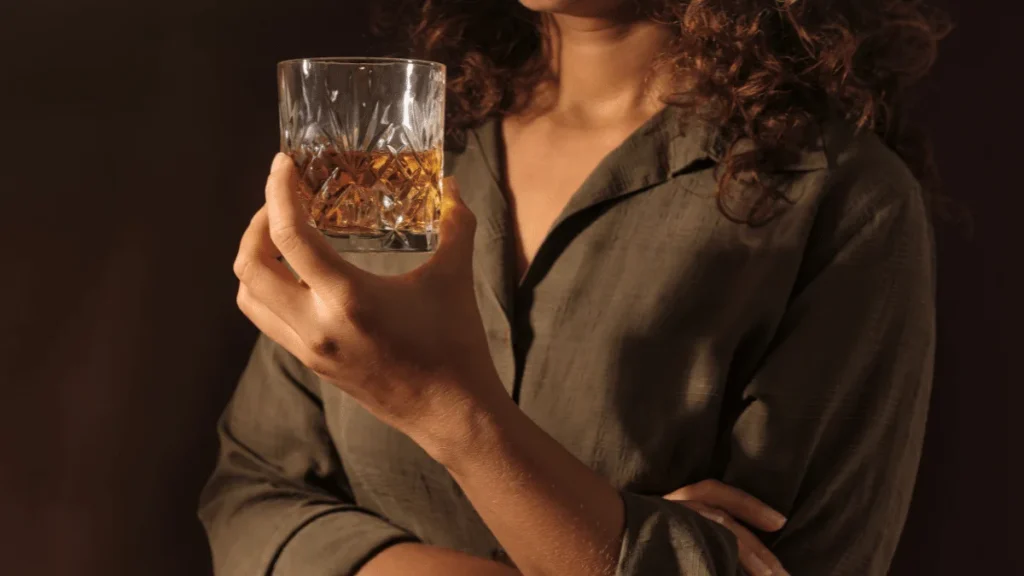
I was standing by the bar at our gym, shaking out my quads after a brutal session, when I caught myself doing what so many of us do: ordering a glass of wine and telling myself it’s fine. Just one.
The truth is more nuanced than we like to admit. Let’s look at what the research actually says.
The Why
For decades, light drinking was thought to protect your heart — thanks to those famous J-shaped curves from observational studies. A new UK Biobank analysis changed that story entirely. The study looked at more than 300,000 people using nonlinear Mendelian randomization and found that once you adjust for smoking, BMI, activity level, vegetable intake, red meat, and self-reported health, the cardioprotective effect of light alcohol disappears.
All amounts of alcohol were linked to increased cardiovascular risk. Light drinking showed minor increases. Heavier consumption produced exponential jumps in hypertension and coronary artery disease risk. Alcohol also raised blood pressure, LDL cholesterol, and gamma-glutamyl transferase — a marker of liver stress — with each metric worsening as intake went up.
The How
A 2023 narrative review broke down how alcohol affects strength and power. High doses (about 1 gram per kilogram of body weight) consistently reduced strength 24 to 60 hours after training. Lower doses (around 0.5 grams per kilogram) showed no clear effect on strength.
Power output — things like vertical jump — didn’t differ meaningfully between alcohol and placebo groups in some studies. But here is the catch: these were short-term studies, not long-term adaptation data.
The big one for us lifters: alcohol significantly reduces mTORC1 phosphorylation. In plain language, that’s the cellular signal that kicks off muscle protein synthesis. Less of it means your muscles get a weaker rebuilding cue after each session.
For an average person: 0.5 g/kg works out to about two standard drinks. At 1 g/kg, it’s closer to five. That’s the difference between “no clear effect” and “reduced strength for up to 60 hours.”
The Takeaway
Alcohol provides zero cardiovascular protection — risks start even at low intake levels. An occasional light post-training drink won’t kill your gains. But frequent or heavy drinking is likely a net negative for both recovery and anabolic signaling.
Your Move:
- Aim for no more than 0.5 g/kg of alcohol on training days — that’s roughly two standard drinks for most people.
- Keep heavy drinking to rest days when muscle protein synthesis isn’t racing to rebuild.
- Track how you feel after your first glass vs. your third. My notebook says the difference in next-morning energy is real.