
The first time I saw my daily calorie burn on a fitness app, I thought it was way too high. Then I learned that my body burns energy all day long, even when I sleep.
Here’s how that energy breaks down:
- BMR — basal metabolic rate
- TDEE — total daily energy expenditure
- NEAT — non-exercise activity thermogenesis
- TEF — thermic effect of food
The human body creates energy from the food we consume through heat. Since our bodies run hot, it breaks down what we’ve eaten into units of energy we call calories (or kilocalories). We aren’t reptiles that can eat once or twice a month — we need a constant influx of fuel to function.
Now let’s get into the details.
Basal Metabolic Rate (BMR)
Your BMR is what you burn at rest. It’s the energy your body needs every day just to stay alive — no matter what else you do.
If you stayed in bed all day doing nothing, your organs would still demand fuel. Your brain needs glucose for processing power. Your stomach burns calories digesting food. Your heart needs energy to keep beating. Your skin and bones use energy for everyday cell repair.
Thermic Effect of Food (TEF)
Your body uses energy to digest the food you eat. Each macronutrient takes a different amount:
- Carbohydrates: 5 to 15% — that’s 5-15 calories to digest every 100 calories of carbs
- Protein: 20 to 35% — 20-35 calories to digest every 100 calories of protein
- Fats: at most 5 to 15% — 5-15 calories to digest every 100 calories of fat
A lot of people say you should eat more protein because it has a higher TEF. I don’t think you need to lose sleep over this. You have to eat food to function, and obsessing about the percentage your body burns on digestion won’t really move the needle on your results.
You also don’t need more than 1 gram of protein per pound of bodyweight. Eating beyond that won’t make fat loss or weight maintenance easier.
Total Daily Energy Expenditure (TDEE)
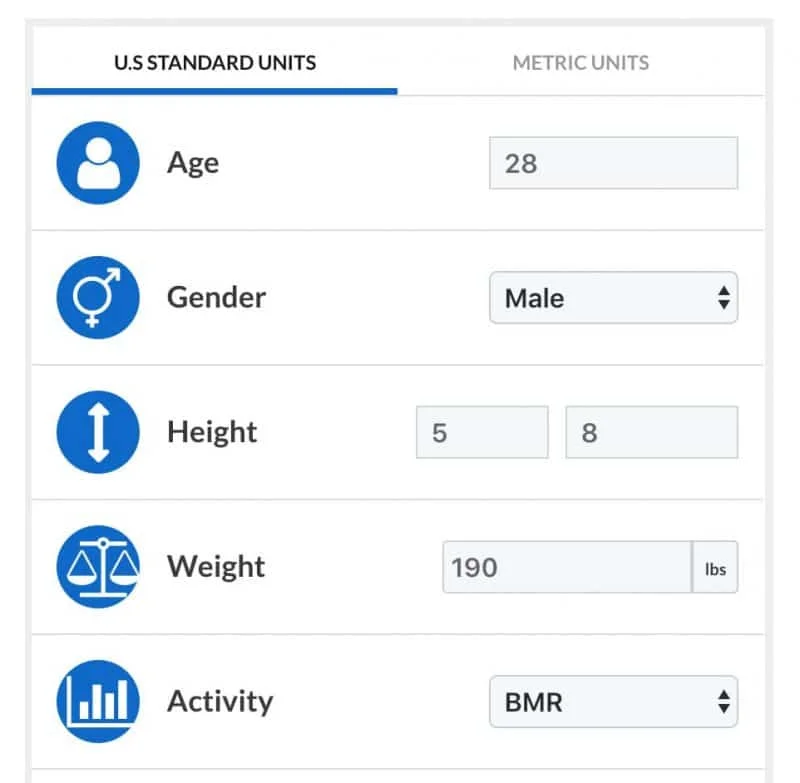
TDEE is your BMR plus everything else you do outside basic survival. Getting out of bed, brushing your teeth, walking around the house, going to work, training at the gym — it all adds up.
For example, a male at 190 pounds burns roughly 1800 calories per day just to survive (BMR alone). But if he trains with weights 3-4 days per week, his daily calorie requirements jump significantly above that baseline.
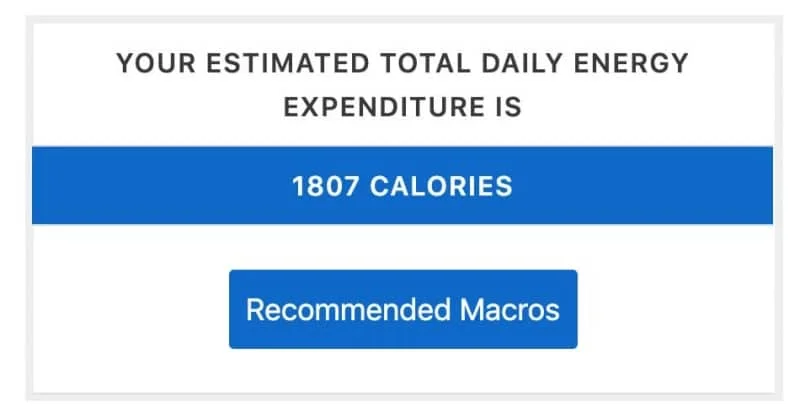
TDEE is also called your maintenance intake. It’s the calorie level that keeps your body weight steady, all activities included.
Are TDEE Calculators Accurate?
Here’s a hint: they’re not — at least not 100% for every person.
Your actual expenditure may differ from what the calculator suggests. Treat these numbers as a starting point, not gospel. Adjust based on your real-world results over time:
- If you eat at the recommended level and lose weight, you need to eat more.
- If you gain weight on those same calories, you need to eat less.
Two things determine accuracy: tracking your nutrition honestly, and something called NEAT.
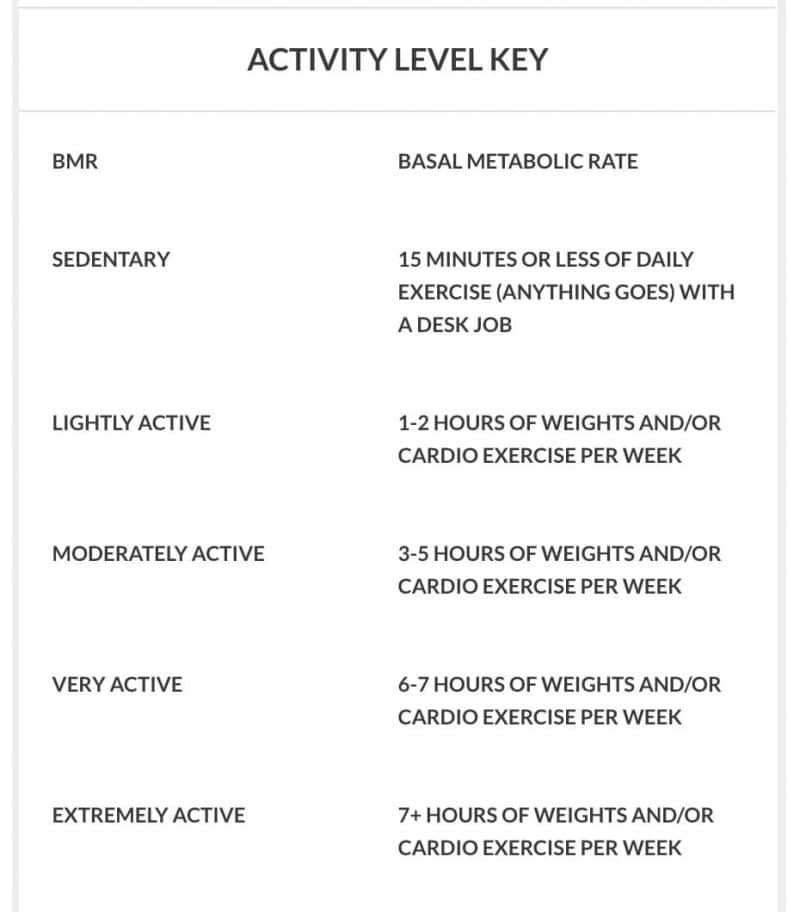
The Activity Level Key
Non-Exercise Activity Thermogenesis (NEAT)
NEAT is the energy you burn for everything that isn’t sleeping, eating, or deliberate exercise. It can differ wildly from person to person.
You might have two people who look identical in daily habits, training intensity, muscle build, and diet — yet they need different amounts of food to maintain their weight. Outside of slight metabolic differences, NEAT is often the reason.
Some people are fidgety. They tap their foot during work or can’t sit still for more than 10 minutes. Others veg out on the couch all day without a second thought.
The person who walks to work and gets up from their desk at regular intervals burns more calories from these small movements than someone who drives and stays chained to a chair.
This is why people with active jobs — delivery drivers, manual laborers, anyone on their feet all day — can seem like bottomless pits when it comes to food.
Why Energy Balance Matters
To maintain simply means replacing the energy you’ve expended with more energy from food. It’s cyclical. You’ve been doing your whole life without thinking about it.
If you expend 3000 calories in a 24-hour period and consume 3000 calories, you won’t gain or lose weight. Your body weight stays steady with no fat or muscle change.
Your scale will still fluctuate — within 1 to 5 pounds (or more, depending on glycogen storage, water retention, sodium intake, bowel movements). But the trend over time tells the real story.
Your Move:
- Calculate your TDEE — use an online calculator with your height, weight, and activity level. It takes 30 seconds.
- Track your food for one week — see if the calculator’s number matches reality by watching whether your weight stays flat.
- Notice your NEAT today — count how many times you get up from your desk. Try adding one extra movement break before lunch.