
My 6 a.m. session started the same way it usually does: cold coffee, empty gym, and a body that still hadn’t fully logged off from last night. I’d been doing everything right on the training side. What I hadn’t touched was the last hour of the day — the part where sleep actually gets won or lost.
So I treated my bedtime like a program, the way I’d build a block. Here’s what worked.
The 3-2-1 Wind-Down
This is the whole system in one chart. I keep a version of it in my training log because it takes 30 seconds to check.
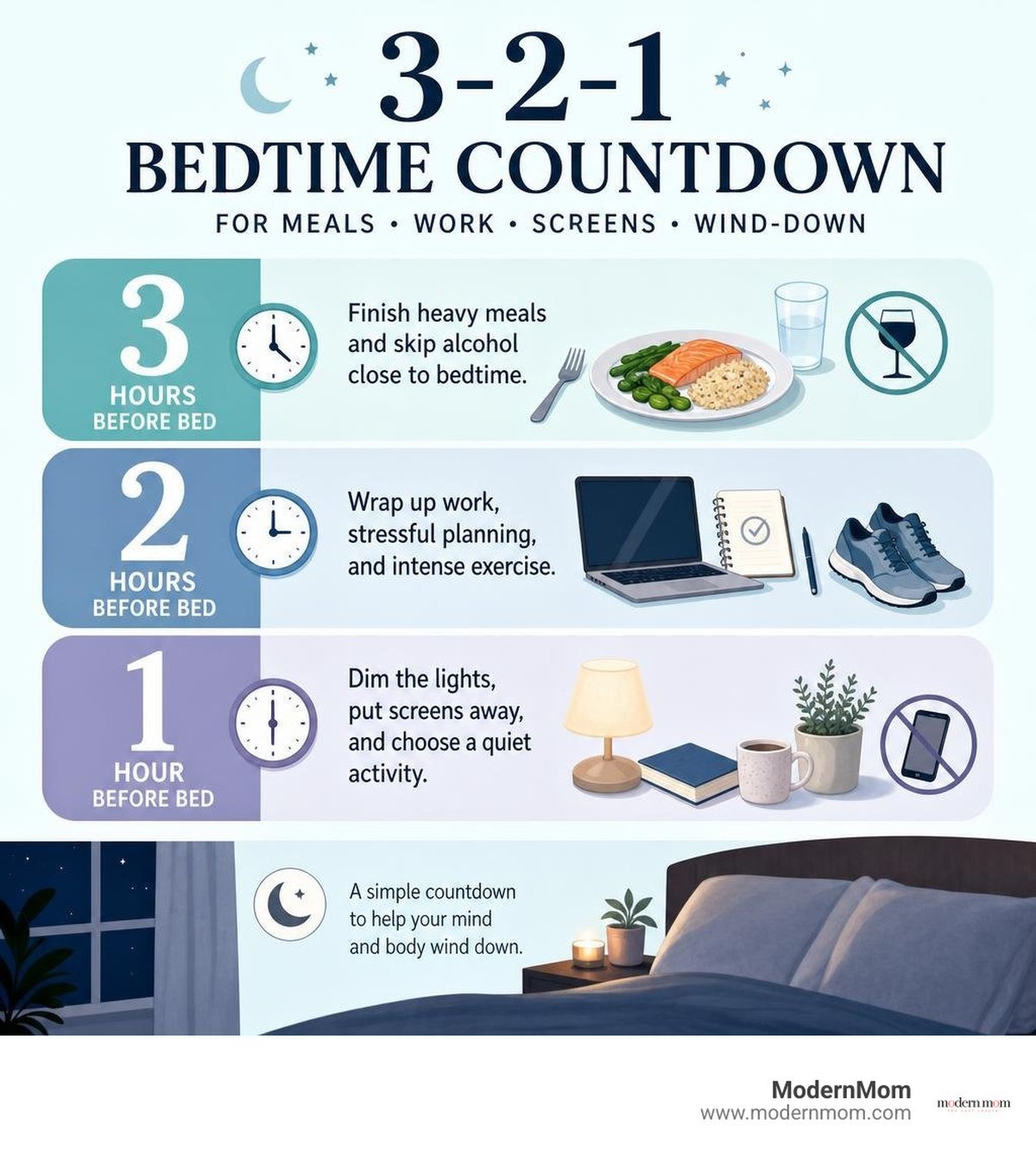
- 3 hours before bed: Finish your last big meal. Skip alcohol — it gets you drowsy, then it chops up your sleep later in the night.
- 2 hours before bed: Close the laptop. No stressful planning, no work email, no intense session. Save the hard reps for the day.
- 1 hour before bed: Dim the lights, put the phone face-down, and pick one quiet thing: a book, some stretching, or a few lines in a journal.
That’s it. It’s not a 12-step ritual. It’s a cue your nervous system can actually follow.
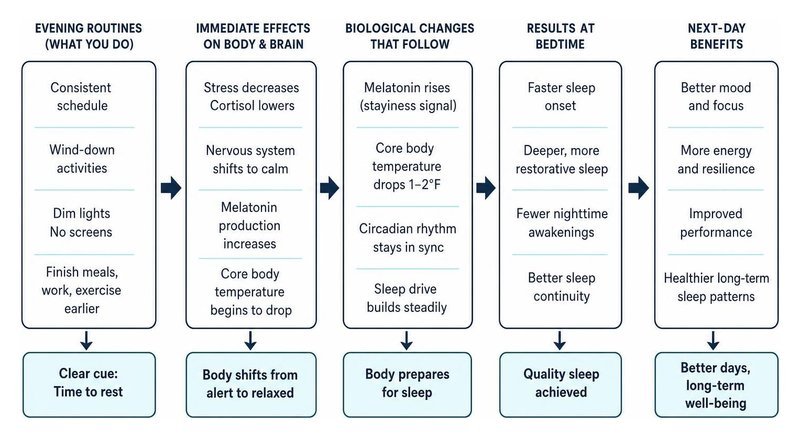
Why Your Evening Runs on Two Switches
Your body sleeps on two systems. One is your circadian rhythm — the 24-hour clock that gets reset by light. The other is sleep drive, the pressure that builds the longer you stay awake.
When the room gets dark, your brain makes melatonin. And your core body temperature has to drop by 1 to 2°F for you to fall asleep fast. Keep stress high into the evening and your cortisol blocks melatonin — you’re wide awake in a dark room. A predictable wind-down gives your nervous system time to switch from alert to rest. That’s the whole trick.
Coach’s Math: Why 30-90 Minutes
Wind-down window: 30-90 minutes. That’s the window sleep researchers point to as the time your nervous system needs to downshift from fight-or-flight into rest-and-digest. Anything shorter and you haven’t finished the shift. Anything longer and you’ll just end up lying there. Aim for the middle and defend it.
The 20-Minute Rule
Lying awake with a racing mind trains your brain to associate your bed with stress. The fix is the 20-minute rule: if you’re not asleep after 20 minutes, get up.
Do a quiet activity in dim light — read, stretch, whatever’s low-stim. Go back to bed only when you feel drowsy. Before the lights go out, try a 5-minute offload: write tomorrow’s list on paper. Getting it out of your head beats re-reading it in bed.
Cut the Three Sleep Stealers
Three things quietly wreck most people’s nights: blue light late in the evening, afternoon caffeine, and alcohol. Blue light tricks your clock into thinking it’s still daylight. Caffeine you had six hours before bed is still circulating. And alcohol — yeah, it knocks you out, then fragments the deep cycles you need.
If the room is noisy, white noise masks street sounds and helps you drift off faster. Pink noise — think steady rain or ocean waves — leans into the deeper frequencies that support deep sleep. Pick one and keep it consistent.
Downshift Your Nervous System
If you’re the type who’s still revved up at 10 p.m., use a technique that forces your body to slow down:
- Box breathing: In 4, hold 4, out 4, hold 4. Two to three minutes is plenty.
- Extended exhale: Inhale for 4, exhale slowly for 8. The long exhale is what calms you down.
- Progressive muscle relaxation: Tense each muscle group for 5 seconds, release for 10, working from your toes up to your face.
I do two minutes of box breathing after I brush my teeth — it’s my anchor, and it’s the only part of my routine that’s never slipped.
Set Up Your Bedroom Like a Recovery Zone
Temperature: 65-68°F (18-20°C). Cool enough that your body’s temperature drop isn’t fighting the thermostat. Light: blackout shades or a soft eye mask, and swap the overhead for a warm, low-wattage lamp an hour before bed. Your bedroom should feel like recovery, not another workspace.
What to Have on the Nightstand
Going to bed hungry or bloated both cost you. If you need a snack, keep it light and sleep-friendly:
- Tart cherry juice — it comes with natural melatonin.
- Chamomile tea — a mild, familiar wind-down.
- A small Greek yogurt or a banana — protein plus magnesium to settle the muscles.
- Magnesium glycinate — 200-400 mg, the form most people tolerate well.
Households, Kids, and the ADHD Brain
If you share a home, everyone on your team has their own clock, and that’s fine. Toddlers do best with visual routines — a simple chart of bath, teeth, books, bed — and a little choice: pick the pajamas, or pick between two books. Give a kid a warm bath or shower 1 to 2 hours before bed; the drop in core temperature afterward speeds sleep onset by about 10 minutes on average.
If you or your kids have ADHD, the evening is where the brain won’t downshift. Move your deep-dive hobby earlier in the day so it doesn’t hijack the wind-down window, and swap white noise for brown noise — it’s deeper and calms a racing mind better. One change at a time. Not a renovation.
How Fast Will It Work?
Give it 7 to 14 days. Your internal clock takes about a week to lock into a new schedule, and most people feel the difference inside that window. Stack the new habit onto something you already do — box breathing after brushing your teeth — and get 5 to 10 minutes of direct sunlight soon after you wake. That morning light is what resets the clock for the whole day.
FAQ
What should I avoid in the last hour? Hard workouts, work emails, social media, heated conversations, and heavy or high-sugar food — all of them spike your heart rate or your cortisol when your body wants to rest.
Can’t fall asleep after 20 minutes? What now? Get out of the bed. Read or stretch in a dim room, and come back when you’re genuinely drowsy. Don’t fight it in the dark.
When should I see a doctor? If sleep trouble runs longer than three months, three or more nights a week, or it’s wrecking your days, get checked. Sleep apnea, restless legs, and chronic insomnia are treatable, but they need a real diagnosis.
Your Move:
- Tonight, set a 20-minute alarm before bed. When it goes off, lights dim, phone face-down.
- Move your last workout or last work email at least 2 hours earlier this week.
- Add 2 minutes of box breathing after you brush your teeth. That’s the whole start.