
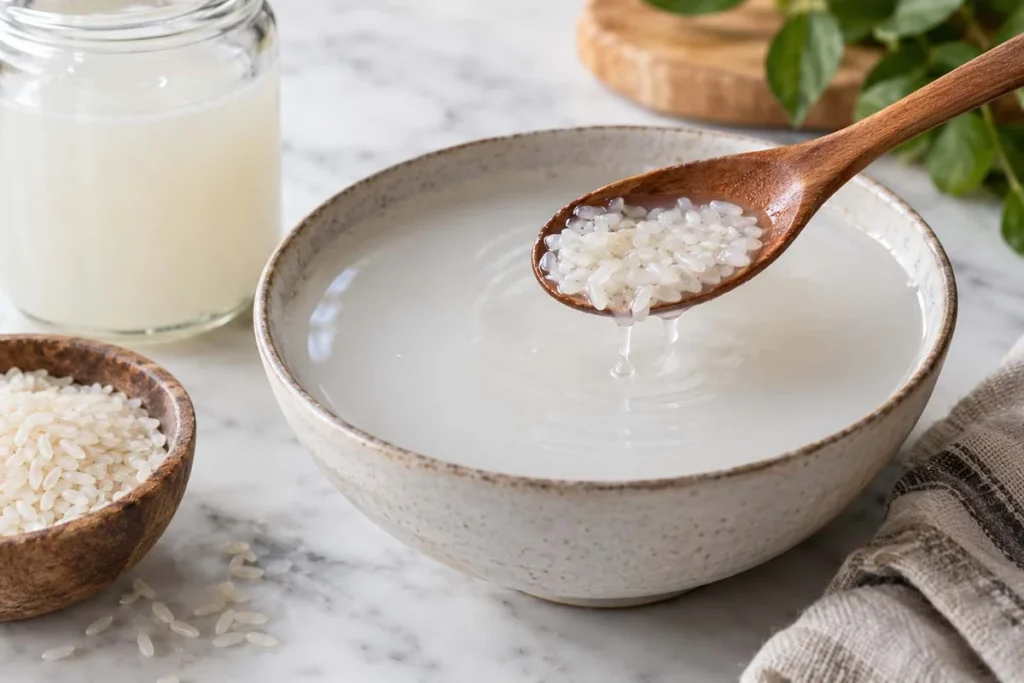
I almost lost a bowlful of cloudy water last week. I was rinsing rice for a big pot of soup, and the milky rinse was already halfway down the drain before I remembered: this stuff is useful. I’ve kept a note about it in my training log for months, and tonight I finally tested it properly. Nine uses below. I’ll tell you straight where the evidence is thin — and where it’s solid.
Quick note before you try anything on your skin or hair: rice water isn’t a medical treatment, and nothing here replaces your dermatologist or doctor. Low-risk, sure. Proven, not always. So try gently and stop if something feels off.
The 9 uses
1. Hair rinse
The most talked-about use — and one of the least proven. A dermatologist quoted by the University of Minnesota Medical School says there isn’t enough evidence for hair-growth claims, and the starch can pull moisture out of hair, especially coiled hair that breaks easily. Cleveland Clinic dermatologists call the benefits mostly anecdotal, the risk low — but skip it if your scalp is inflamed. A 2024 analysis of TikTok videos tagged #ricewater found hair growth was the top claim, while protein overload and dry hair were the problems people mentioned in comments.
Want to try it? Pour it over clean, damp hair, leave it about 20 minutes, then rinse out. If your hair turns dry or stiff, stop.
2. Face toner
Online, rice water gets pushed for hydration, brightening, and dark-spot fading — but those claims aren’t well established. That same TikTok analysis found glowing skin, anti-aging, and dark spots as the most common claims, with acne the most common problem mentioned. Only about 2 percent of the videos came from board-certified dermatologists. If you’re allergic to rice, skip it entirely.
To try it: patch-test a small area first, use a fresh batch, and dab it on with a cotton pad after cleansing. Stop at any redness, burning, or irritation. Treat it as a mild, low-cost toner — not a treatment.
3. Bath soak
One small study added rice starch to bathwater and found better skin barrier function on irritated skin and mild eczema patches; healthy skin showed no change. It was only about a dozen volunteers per group, and it used starch powder, not rice water, so a rice-water soak may not do the same. Still: it’s a gentle, inexpensive experiment for dry skin. Have eczema? Check with your dermatologist first.
4. Houseplants
Gardeners use rice water as a mild boost for potted plants. A 2021 lab analysis found washed rice water contains plant nutrients and some beneficial bacteria — but the authors said crop-growth studies were still needed to confirm any real benefit. The common rule of thumb: dilute it with several parts fresh water rather than pouring it on straight. That’s a habit, not a tested dose. Use plain, unsalted water only — salt harms plants. Too much organic material can bring mold or pests; if you see either, or smell something sour, stop. It’s an occasional extra, not a replacement for plant food.
5. Garden beds and containers
Outdoors there’s a bit more research. A 2023 field trial published in Heliyon grew choy sum over three planting cycles and found the best results came from combining fermented rice water with half the usual mineral fertilizer — not rice water alone. It also made the soil more acidic. That was one crop under one set of conditions, so it isn’t a schedule for your yard. Experiment? Use plain, unsalted rice water sparingly and watch for pests or odors.
6. Soups and stews
One of the most straightforward kitchen uses. The Institute of Food Science and Technology explains that starch granules swell and absorb liquid as they heat, then release starch that thickens the pot. Rice water is a mild version of that — it adds body without flour or cornstarch. Swish rice in fresh water until it turns milky, save the second rinse, and stir it in place of some of the broth. Cooks in Korea use rice starch water this way in stews. Simmer, then taste before you add salt.
7. Parboiling daikon and other tough vegetables
In Japan, the starchy rinse water is called togi-jiru. Japan’s Ministry of Agriculture, Forestry and Fisheries says in its recipe for simmered daikon with shrimp that you can parboil the daikon in rice-washing water if you have it. Parboil first, then simmer the daikon in your seasoned broth.
8. Soaking fish
Traditional, with no formal testing behind it. Some culinary sources describe soaking strong-smelling fish, like sardines, in rice water to tame the odor and draw out excess salt. Keep the fish in the fridge while it soaks, then rinse and pat it dry before cooking.
9. Dish soak and light cleaning
Some Japanese households traditionally reuse rice rinse water to soak textured dishes and wipe kitchen surfaces. Tradition, not tested science. Rice water isn’t a disinfectant — wash anything that touched raw meat with soap and hot water as usual.
How to make rice water
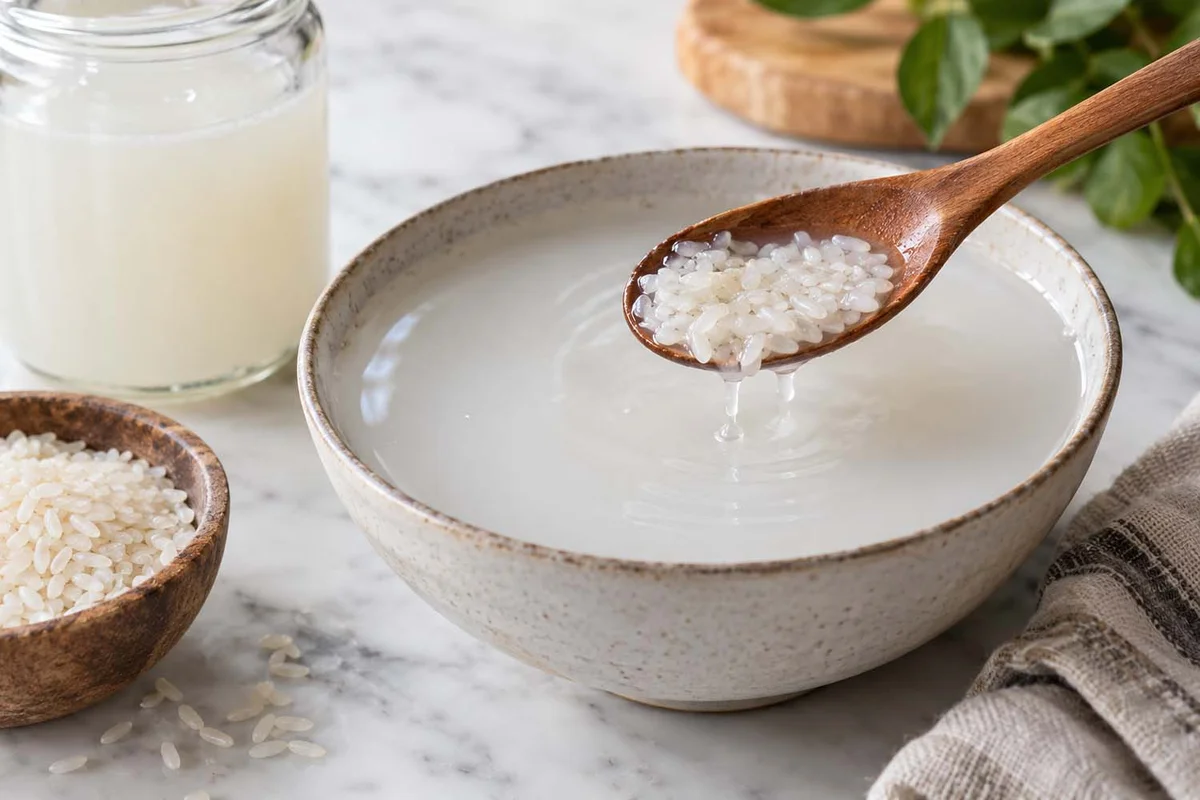
Two easy routes. For a soak: cover a handful of uncooked rice with a few times its volume in water, let it sit, then strain. Cleveland Clinic describes a 30-minute to 2-hour soak — boiling may reduce nutrients, and a long ferment could introduce bacteria. For a kitchen batch: swish rice in fresh water while you rinse it and save the liquid. Many cooks prefer the second rinse, since the first can carry dust or debris from the rice.
Keep it fresh. Rice water isn’t a preserved product — treat it like a perishable homemade liquid. Refrigerate what you’re saving and use it promptly. If it smells sour, looks unusual, or develops mold, throw it out. For hair and skin, make a fresh batch each time.
Before you use it
Rice water is not a rehydration drink. If a child or adult has diarrhea, use a commercial oral rehydration solution. An American Family Physician review recommends widely available low-osmolarity formulas and says homemade solutions are generally not recommended because of mixing errors. Call a clinician if symptoms are severe or last. Three more rules:
Allergy or sensitivity: skip it on skin or hair if you react to rice, and stop at any redness or dryness. Salt: never use water from salted rice on plants. Storage: refrigerate, use promptly, throw it out if it smells sour or looks off.
Quick answers
Does rice water help hair grow? It isn’t proven. The University of Minnesota Medical School says there isn’t enough evidence to support the claims, though Cleveland Clinic dermatologists note it’s low risk for most people.
How long does rice water last? There’s no established shelf life for homemade rice water. Refrigerate it, use it promptly, and throw it out if it smells sour, looks unusual, or develops mold. For hair and skin, use a fresh batch.
Can you drink rice water? I wouldn’t. It should never replace an oral rehydration solution when someone is dehydrated.
Which rinse should you save? Many cooks prefer the second rinse. The first can carry dust or debris from the rice, while later rinses still hold plenty of starch. It’s a cooking preference, not a food-safety rule.
The bottom line
The kitchen uses are the safest bet: soups, tough vegetables, fish. The skin, hair, and plant uses are low-risk, low-cost, and unproven — try them gently and stop if something feels off. Cooking rice tonight? Save the rinse water before it goes down the drain.
Your Move:
Step 1: Next time you rinse rice, pour the second rinse into a jar instead of the drain. Step 2: Stir it into your next soup or stew and taste. Step 3: If you want to test it on your hair, try the 20-minute rinse once — and note how your hair feels in your training log.