
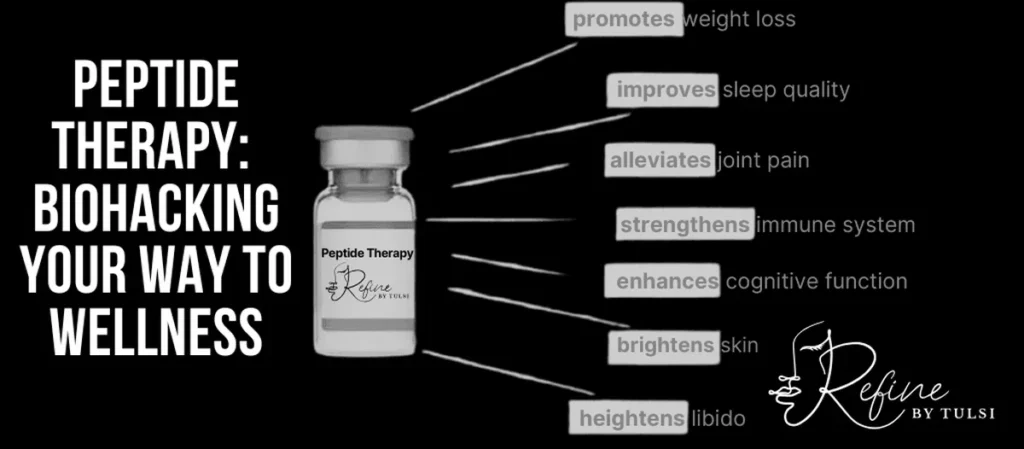
I stood at my kitchen counter this morning with 12 pills in my hand, a shaker of protein powder, and the same thought I’ve had for months: am I actually doing any of this on purpose?
You know the routine. You track your HRV. You cold plunge. You own a red light panel, a continuous glucose monitor, and a supplement stack that takes 15 minutes to swallow every morning. You listen to every longevity podcast. You know NAD+ from NMN, rapamycin from metformin.
And you’re still guessing.
That’s not a criticism — it’s a diagnosis. Self-directed biohacking is the self-taught version of a discipline that needs medical expertise. The impulse is right: you want to optimize your health and perform at your best. But without baseline labs, monitoring, and physician oversight, all those tools are just an expensive experiment with no control group.
My notebook says I used to be the same way — buying peptides from three different online retailers, feeling marginally better but unable to tell if it was the product or the placebo effect. Here’s what changed when I started treating my health like a training plan instead of a wishlist.
The Why: Five Things Self-Directed Biohacking Misses
No baseline, no measurement. Most people start taking peptides and supplements based on symptoms and podcast recommendations — never establishing a biochemical baseline first. Without pre-treatment labs, you can’t know if something is working or just making you feel busy. IGF-1 levels, inflammatory markers, fasting insulin, thyroid function — these tell the story that “I feel better” doesn’t.
Unverified product quality. Online peptides and supplements are unregulated. Independent testing has found incorrect concentrations, bacterial contamination, degradation from improper storage, and entirely wrong peptide sequences. One patient of mine was injecting a degraded product every night for months and wondering why it wasn’t working.
No drug interaction review. Growth hormone secretagogues can worsen insulin resistance. Thyroid-stimulating compounds can cause arrhythmias in patients with undiagnosed cardiac conditions. A physician reviews your complete medication list before prescribing anything. The internet doesn’t.
No monitoring, no safety net. Chronic use of growth hormone secretagogues elevates IGF-1. If it rises too high and stays there unchecked, cancer risk may increase. Testosterone supplementation affects hematocrit, liver function, and PSA. These require regular lab checks — something self-directed biohackers often skip or do sporadically.
No integration. The most sophisticated biohackers treat each intervention in isolation: this peptide for sleep, that supplement for focus. But hormone levels affect how peptides work. Gut health affects nutrient absorption. Sleep quality affects growth hormone release. Biology doesn’t run in silos.
Coach’s Math
One patient spent $15,000 on biohacking over two years — peptides from online retailers, a supplement stack from five different brands, a CGM, red light, cold plunge. After physician-led labs, she was down to two peptides (not five), proper hormone optimization, and actual monitoring. Same philosophy, fewer products, real data.
The How: What Precision Medicine Looks Like
Step 1: Advanced diagnostics. Not the basic panel your primary care doctor runs. A complete hormone panel (total and free testosterone, estradiol, progesterone, DHEA-S, SHBG, full thyroid, cortisol rhythm), metabolic markers (fasting insulin, glucose, HbA1c, lipid panel, homocysteine, uric acid), inflammatory markers (hs-CRP, ferritin), organ function panels, IGF-1, vitamin D, B12, magnesium.
Step 2: Protocol design based on data. Your plan isn’t built on what worked for a podcaster. It’s built on your labs, your symptoms, and your goals. Two people the same age with the same complaints can need entirely different protocols because their biochemistry is different.
Step 3: Pharmaceutical-grade interventions. Every peptide sourced from licensed compounding pharmacies. Every hormone prescribed and monitored by a physician. The supply chain is controlled, verified, and accountable.
Step 4: Ongoing monitoring. Labs every 8–12 weeks. Clinical check-ins monthly. If something isn’t working, you know within weeks — not months.
The Takeaway
Biohacking got the philosophy right: your health is your responsibility, proactive optimization beats reactive treatment, and real tools exist to extend your healthspan. Where it falls short is execution — unverified products, no baseline data, no medical accountability.
Physician-led medicine takes the same tools and applies them with diagnostic precision. It’s not a step backward from biohacking. It’s the next step forward.
You can keep your cold plunge. You can keep your sauna and your sleep tracking. What changes is the layer underneath — the labs, the sourcing, the oversight that turns smart experimentation into medicine you can measure.
Your Move:
- Step 1: Pull out your current supplement bottle lineup and count how many you actually know the purpose of. (Takes 2 minutes.)
- Step 2: Book a blood panel that includes IGF-1, hs-CRP, fasting insulin, and a full thyroid profile — even if you feel fine.
- Step 3: Bring your stack to your next doctor’s visit and ask one question: “Are any of these interacting with each other?”