
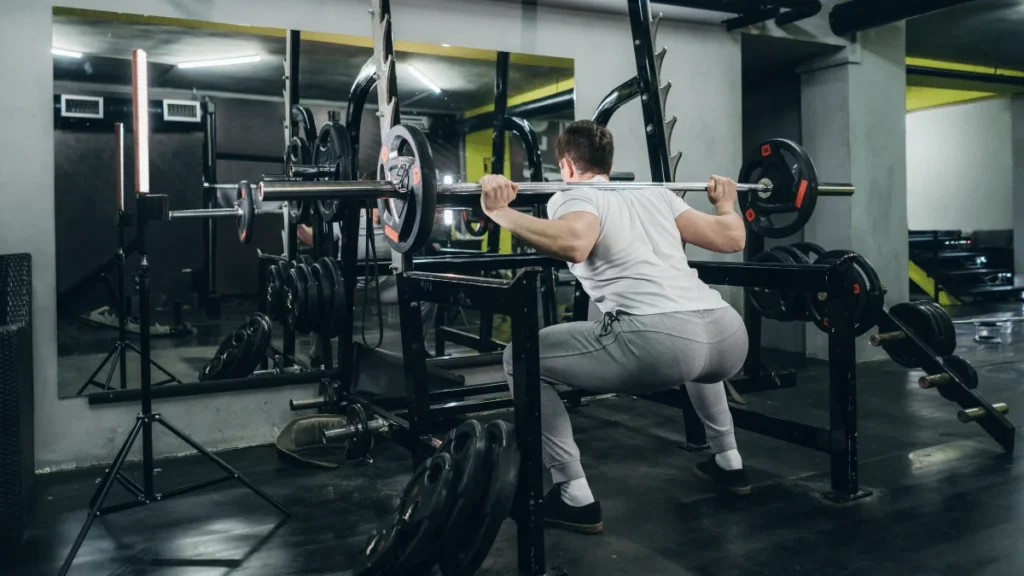
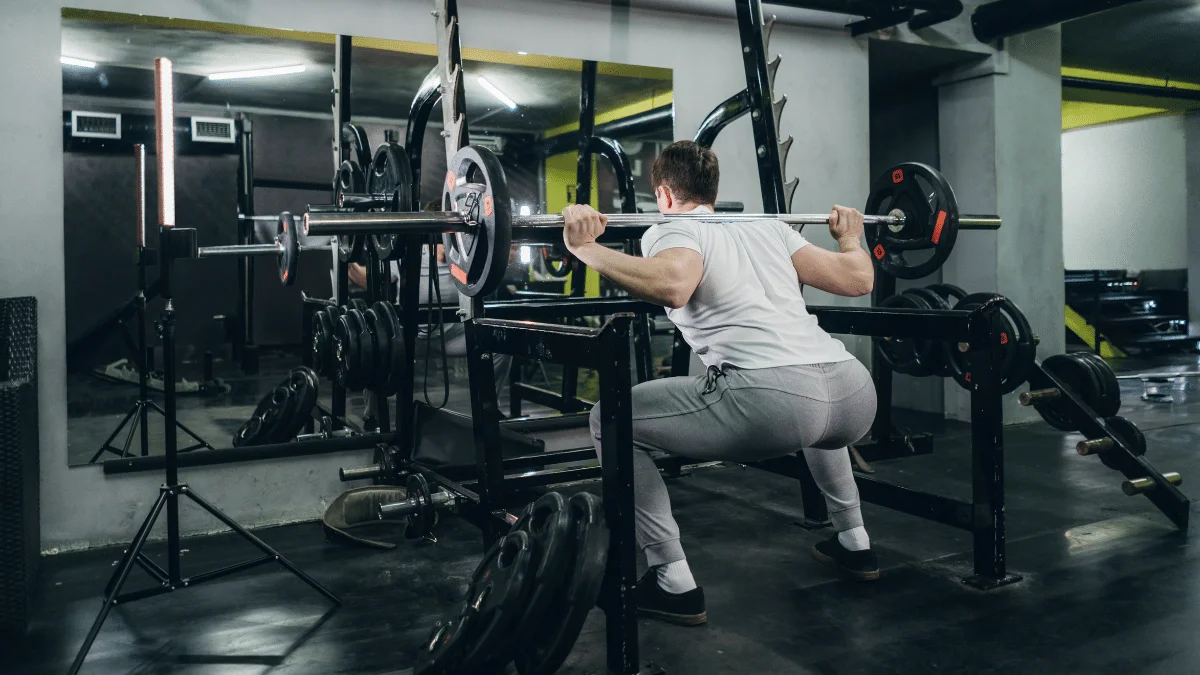
I was in the gym last week watching a lifter use weight releasers for squats — extra plates dropping off at the bottom of each rep so the way down felt heavier than the way up. It looked impressive. I’ve wondered the same thing myself: if we’re supposed to fail on the concentric push, does overloading the eccentric phase actually build more muscle?
That logic has been floating around fitness circles for years. But tidy logic is not data. And when you line up the research, the story gets messier than the sales pitch.
The Study
A recent study by Yue and colleagues put this to the test with squats. Participants did 4 sets of 6 reps. One group used traditional loading. Another used weight releasers on 2 reps per set. The third used them on all 6 reps.
With the releasers, the eccentric load was 120% of 1RM while the concentric dropped to 75% of 1RM. The result: eccentric overload training led to greater growth in the rectus femoris cross-sectional area — though measuring that particular muscle for squats was an odd choice.
What Previous Research Shows
The bigger picture, however, is less convincing. In a 12-week study by Douglas and colleagues, trained rugby players did accentuated eccentric squats about 20% heavier than the concentric load on a Smith machine. The eccentric group showed early gains in strength and sprint speed. But quadriceps muscle thickness did not increase in either group.
Other longitudinal studies tell the same story: similar hypertrophy between traditional and accentuated eccentric loading when compared set by set.
The Mechanism
Here is why. Increasing load on the eccentric phase fatigues you more, which reduces total reps across the set. As a rough heuristic, the total tension may end up similar enough that hypertrophy outcomes are about the same.
The Practicality Problem
Even if accentuated eccentrics deliver a small hypertrophy edge, the logistics are real. Free-weight eccentric overload requires weight releasers — and ideally one or two partners to reattach plates between reps. That is cumbersome in a powerlifting gym, let alone a commercial one.
Newer devices like the Voltra adjust resistance dynamically through motorized control, making eccentric overload more accessible. But they are still niche and expensive until adoption becomes widespread.
What I Would Do
From a hypertrophy perspective, accentuated eccentric loading is a solution in search of a problem. Normal training already exposes your muscles to sufficient eccentric stimulus.
If you want to try it, here are the most practical options: use a device like the Voltra for automatic resistance adjustment, or simply lean into some body English on the concentric push after a slow, deliberate lowering phase. You can also overload the eccentric on machine exercises by doing them unilaterally and using your other arm or leg to assist on the way up.
My notebook says: logic does not equal evidence. This line of research is a reminder that compelling theory needs actual data behind it before we add complexity to our training.
Your Move:
- Pick one exercise this week and lower the weight slowly — count 3 seconds on the way down.
- On your next machine workout, try unilateral eccentrics with a little help from the other side on the concentric push.
- If you have access to a Voltra or weight releasers, schedule one session this month to feel the difference yourself.